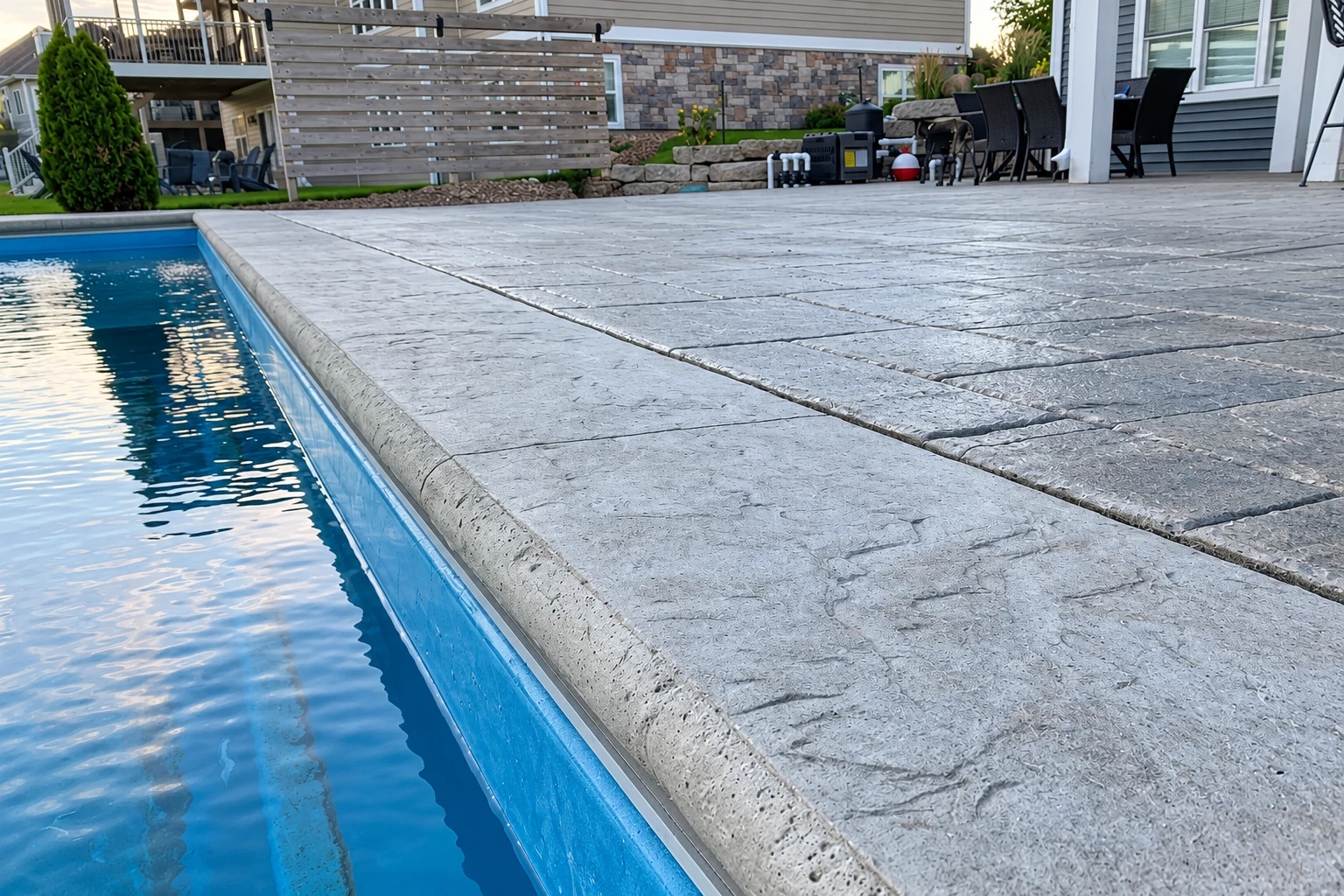
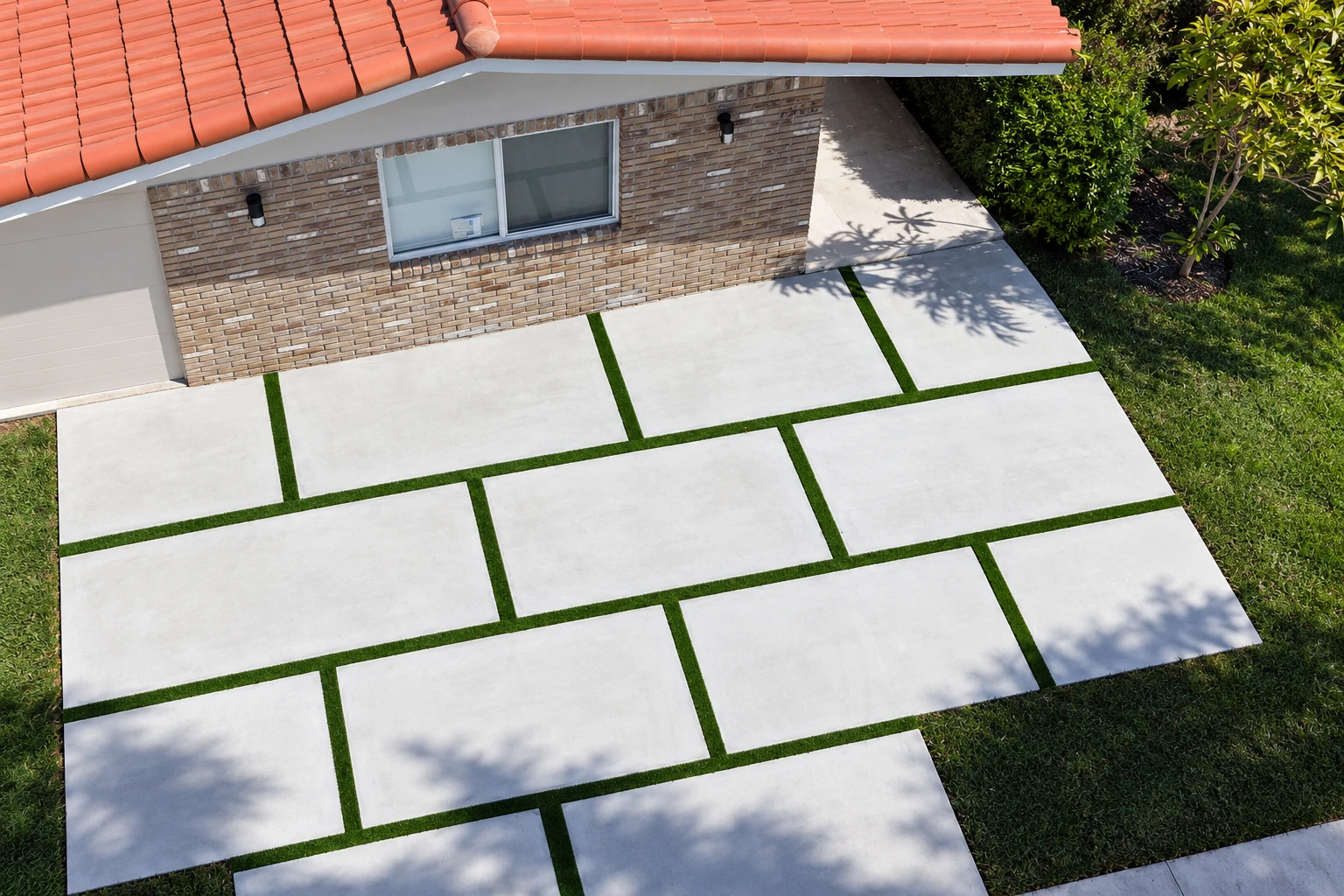
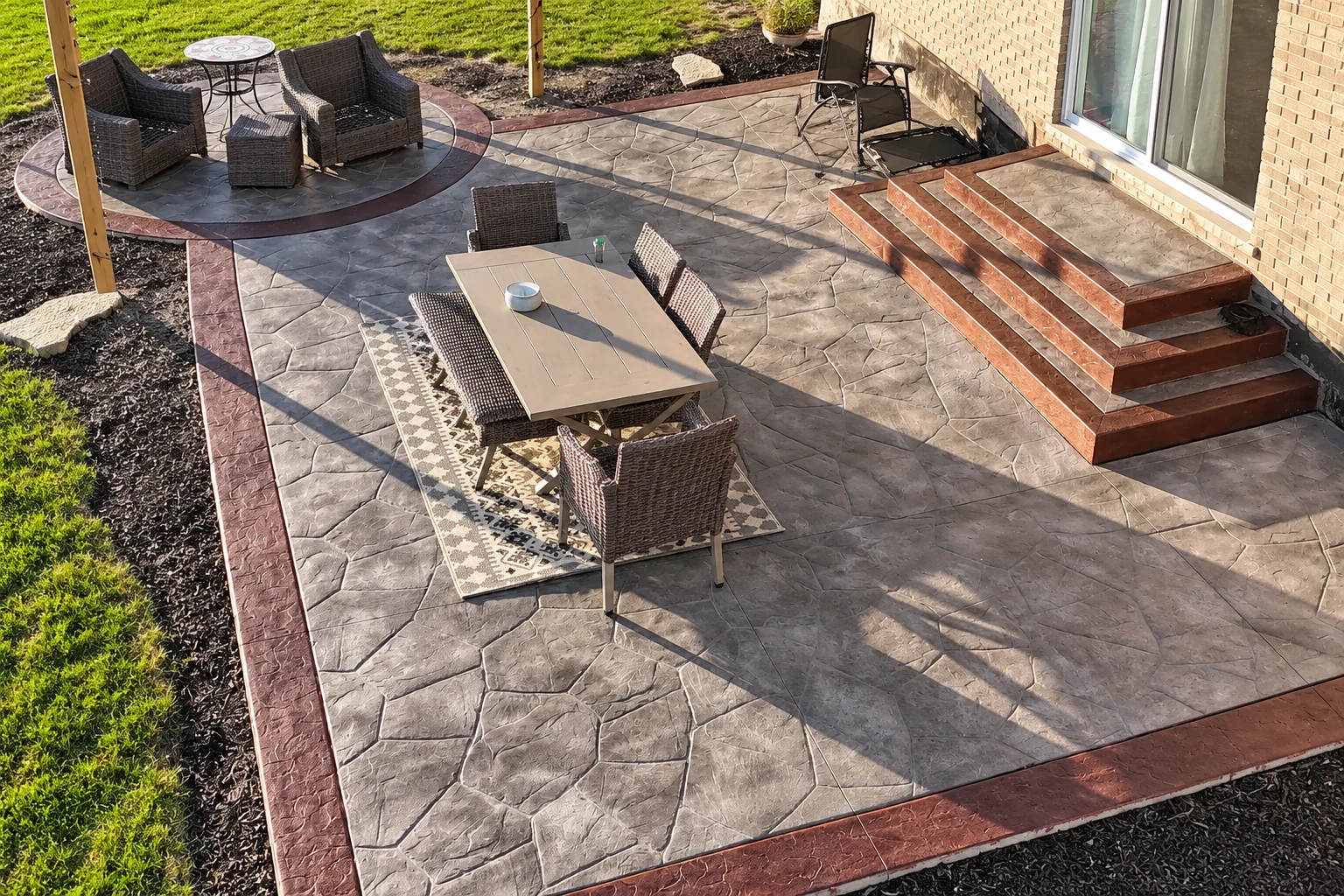
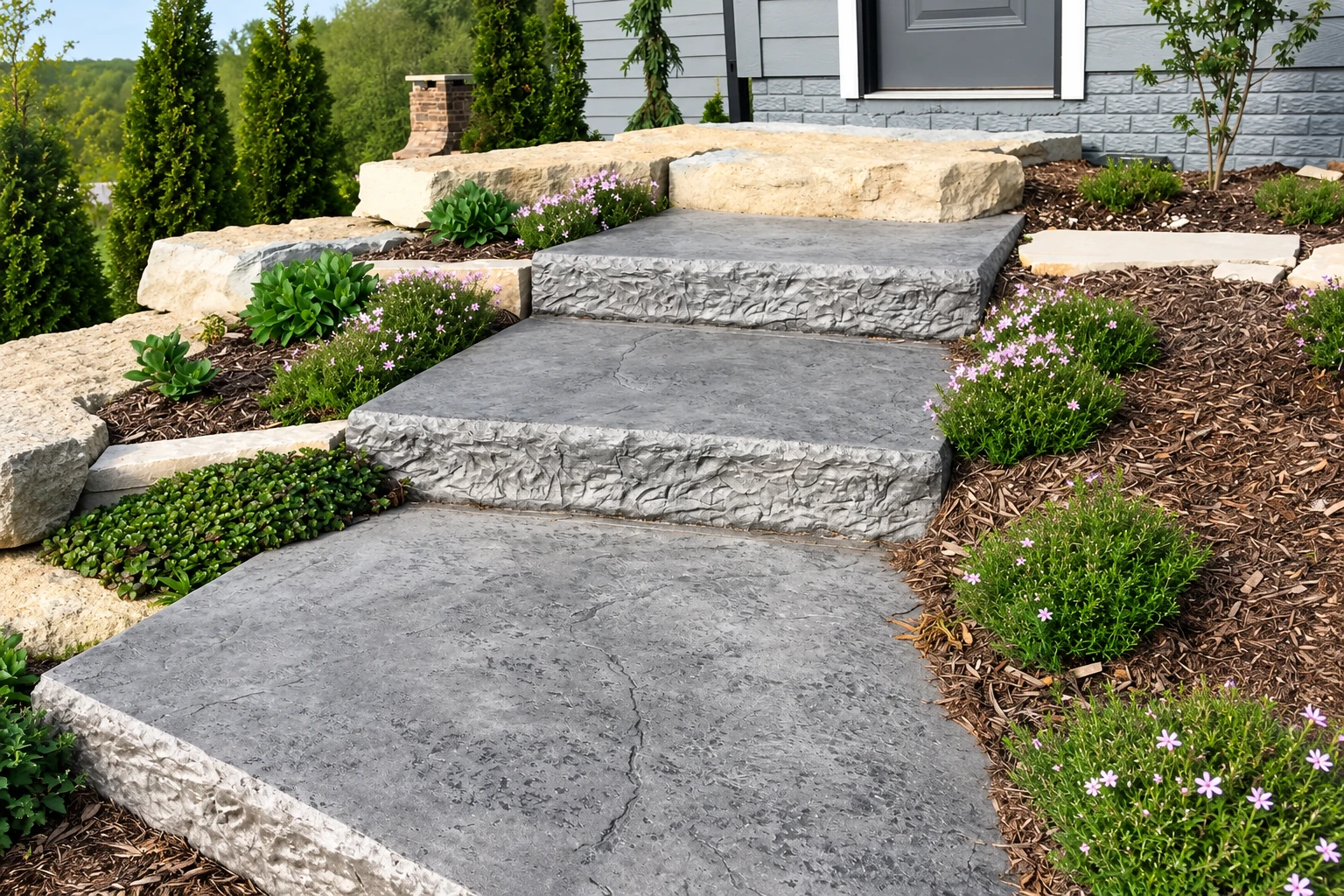
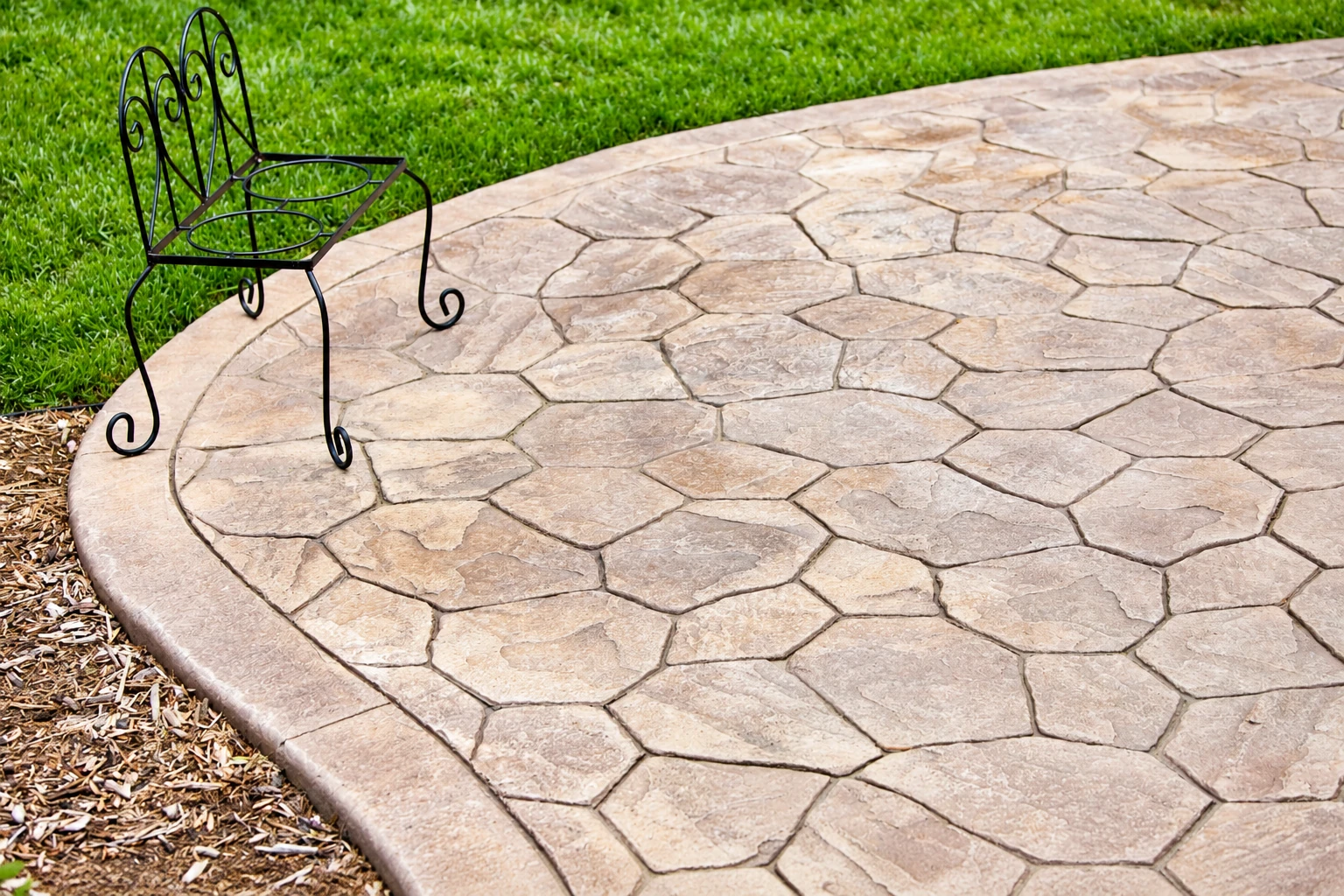
Carson is a city of homeowners, and most of what we're called out for there is the concrete around a house: the driveway, the back patio, the walk to the front door and the garage floor. We come over from Palos Verdes Estates for it, the same as we do for West Carson and Gardena nearby. By the time someone calls, the old slab has usually sunk at one corner, cracked across the middle or started holding water against the house, and I want to know which one before we talk about anything new.
A lot of the yards here sit fairly flat, so water won't run off a slab unless we give it somewhere to go. I look at where the water runs before we set a single form, and we build the slab to slope away from your house, because a patio that tips toward the wall sends the water straight to your foundation.
What moves the price and the schedule
The price comes down to how big the slab is, whether there's an old one to break out and haul away, how much digging and base work the ground needs, how easily we can get concrete to the spot and what finish you want on top. A plain broom finish, the light texture we drag across the surface so it isn't slick when wet, costs less than stamped or decorative work. The schedule turns on the same things, plus a permit and its inspections when the job needs one, and how long the new slab has to sit before you use it. I come out, look at the job and write the estimate myself, so you'll see your own number for your own yard.
Why we put the money into the base
Concrete cracks, so the honest job is to keep it from sinking and to decide where the cracks go. Most of the bad slabs I'm called to replace started underneath, on a subgrade, the dirt the slab sits on, that was raked level instead of dug out and packed. The base is the first thing people want to cut because nobody sees it on day one, and I'd rather trim the finish than skimp on it. My old boss drilled that into me on my first finishing crew. We also cut control joints, shallow grooves that give a crack a straight line to follow, while the slab is still fresh, so it doesn't crack wherever it likes.
Living without the slab while it cures
You'll be without the driveway or patio for a while after the pour, because concrete needs time curing, the slow hardening that goes on after it looks dry, before it can carry feet and then cars. Plan on parking on the street and keeping kids, pets and sprinkler spray off it until we tell you it's ready, because a footprint or a wet spot in a young slab stays there. With garage floor concrete, your car and everything stored on the floor come out before we break up the old slab. I'll go over the timing for your job when I write the estimate, so you can plan around it.